
Website vs Social Media in 2026: The Better Option for Small Businesses
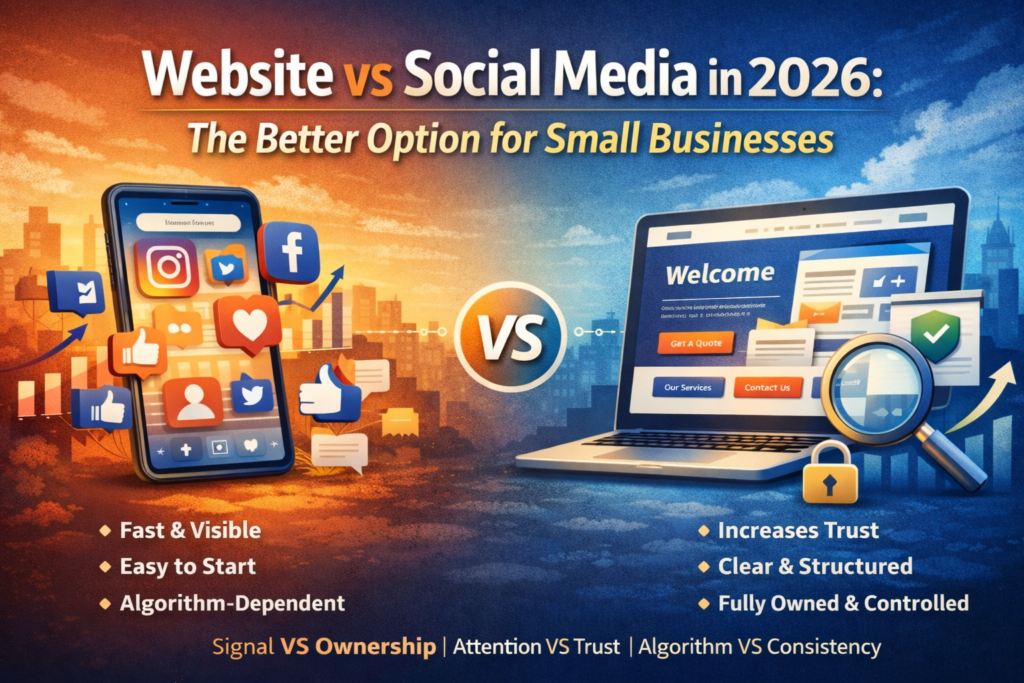
This question usually comes up after someone has already tried social media for a while.
They’ve posted regularly. Maybe they’ve even run a few ads. Messages come in now and then, but growth feels inconsistent. At some point they ask, almost hesitantly, “Do I actually need a website, or should I just double down on Instagram?”
In 2026, the website vs social media debate feels more relevant than ever. Social platforms feel active and immediate. A website feels slower, more deliberate. But after watching how small businesses perform over time — not just in their first few months — the difference between the two becomes clearer.
This isn’t a theory comparison. It’s based on how people actually behave when deciding whether to trust a business.
Why Social Media Feels Like the Obvious Choice First
Social media lowers the barrier to entry. You can start today, post tonight, and see some response tomorrow. For many small businesses, that early momentum matters.
In the website vs social media conversation, social platforms clearly win on speed. They’re especially good at:
- showing activity
- keeping the business visible
- building familiarity over repeated exposure
- starting informal conversations
I’ve seen local service businesses get their first few clients entirely through social media. That part works. But it’s rarely where the story ends.
What Changes When the Decision Becomes Serious
Here’s something I’ve noticed repeatedly.
When the service is low-cost or impulse-driven, social media alone can be enough. When the decision involves real money, time, or commitment, behaviour changes.
This is where the website vs social media difference really shows up.
People stop scrolling and start checking:
- who is behind the business
- how established it feels
- whether details are clearly explained
At that point, most people look for a website — even if they originally found you on Instagram or Facebook.
What a Website Contributes That Social Media Can’t
A website doesn’t replace social media. It does something different.
In the website vs social media comparison, a website’s main job is to reduce uncertainty. It gives structure to information that feels scattered on social platforms.
A solid small business website quietly answers:
- What exactly do you offer?
- Who is this for?
- How does the process work?
- What happens after someone contacts you?
Social media hints. A website explains.
There’s also a trust signal involved. A website suggests intention. It tells visitors the business has thought about how it wants to be understood.
Website vs Social Media: How They Compare Over Time
Instead of abstract pros and cons, this is how the website vs social media balance usually plays out in real businesses:
Area | Website | Social Media |
Control | Fully owned | Platform-dependent |
Structure | Clear and intentional | Fragmented |
Trust | Builds steadily | Tied to activity |
Search visibility | Long-term | Short-lived |
Decision support | Strong | Limited |
Stability | Improves with time | Volatile |
Social media creates attention. A website gives that attention somewhere stable to land.
The Risk of Choosing Only One Side
The biggest mistake in the website vs social media debate isn’t choosing the “wrong” platform. It’s relying on just one.
Social media-heavy businesses often don’t notice the risk early. Nothing breaks suddenly. Results just soften. Engagement drops. Ads cost more. Leads feel less serious.
Without a website, there’s no central place for trust to accumulate. Everything depends on staying visible all the time.
Websites age differently. They don’t spike, but they compound.
Where Should Small Businesses Invest First in 2026?
If someone asked me for a straight answer to the website vs social media question, this would be it:
Start with a simple, clear website — then use social media to support it.
Not a big site. Not a perfect one. Just something that:
- explains the service clearly
- sets expectations honestly
- makes the next step obvious
Once that exists, social media becomes easier. Posts feel anchored. Visitors arrive with context.
Businesses that skip this usually come back later to fix trust gaps they didn’t realise they were creating.
The Strongest Setups Don’t Treat It as Website vs Social Media
The businesses that grow more steadily don’t frame this as website vs social media at all. They assign roles.
Social media handles visibility and conversation.
The website handles clarity, credibility, and decisions.
When those roles are clear, marketing becomes calmer. Less chasing. More guiding.
Final Thoughts
In 2026, the website vs social media discussion isn’t about trends. It’s about how people decide who feels reliable.
Attention starts on social platforms. Trust usually finishes on a website.
That pattern hasn’t disappeared — it’s just become quieter.
Signal to Watch Going Forward
If you’re thinking about improving your small business website, pay attention to how user expectations are changing — not just design trends, but how people decide who to trust online.
- Follow Arsh_Webs on Instagram for practical insights on websites, SEO, and real digital decisions small businesses face.
- Bookmark Arshwebs.com if you want experience-based reads on building websites that actually work.
- Check back occasionally as ideas around trust, speed, and visibility continue to shift through 2026.
This isn’t about chasing trends. It’s about making steady improvements that compound over time.
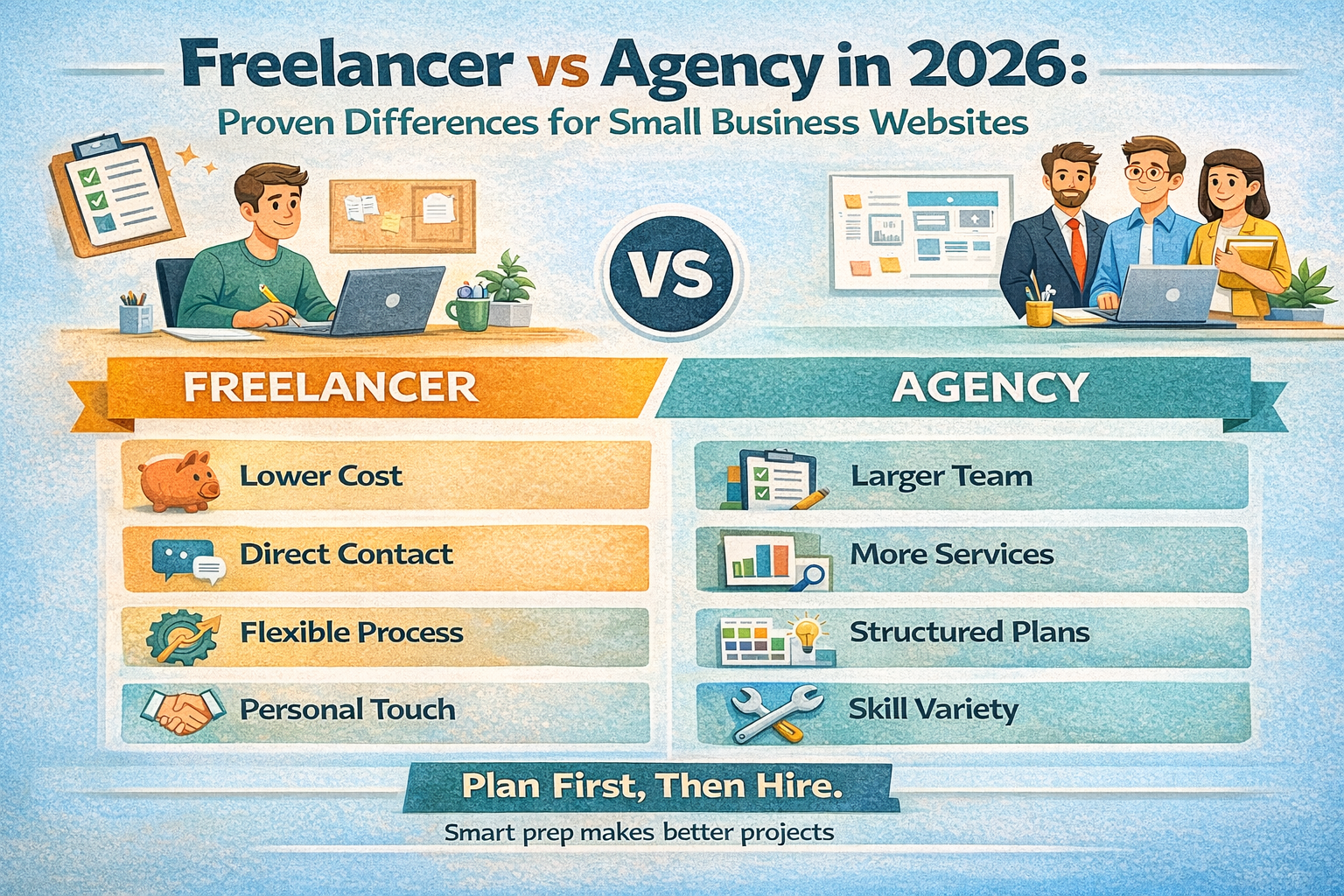
Freelancer vs Agency in 2026: Proven Differences for Small Business Websites
Freelancer vs Agency in 2026: Proven Differences for Small Business Websites At some point, most business owners who plan a
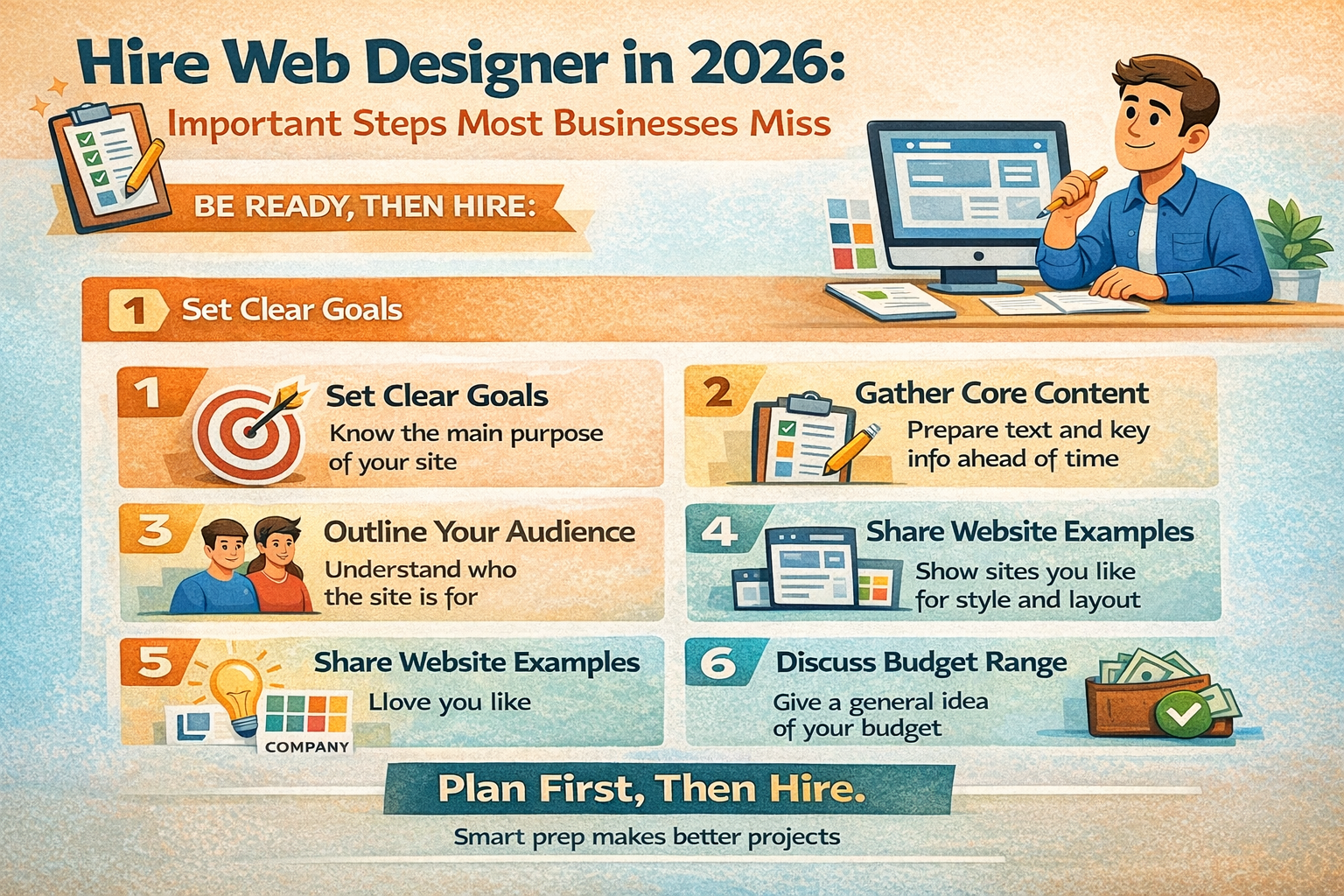
Hire Web Designer in 2026: Important Steps Most Businesses Miss
Hire Web Designer in 2026: Important Steps Most Businesses Miss I’ve noticed something over the years when talking with business