
Freelancer vs Agency in 2026: Proven Differences for Small Business Websites
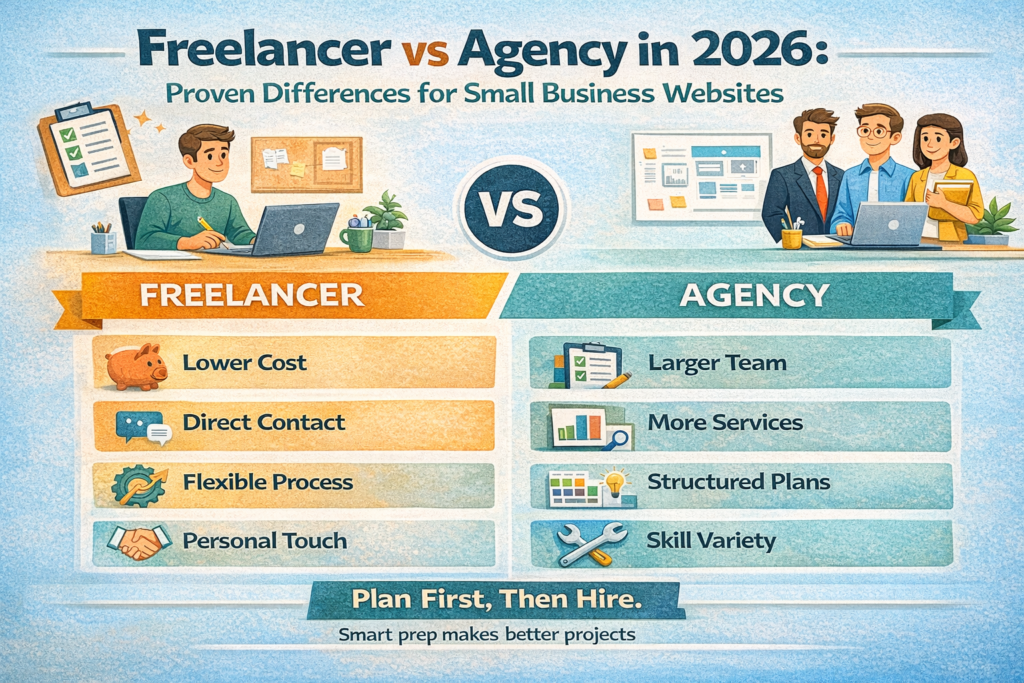
At some point, most business owners who plan a new website run into the same question: should they work with a freelancer or hire an agency?
It’s not always an easy decision. On the surface both options offer similar services — design, development, and sometimes marketing support. But the experience of working with each can be quite different.
Over the years I’ve had conversations with many business owners trying to decide between a freelancer vs agency setup. What I’ve noticed is that the “better” choice depends less on prestige and more on how the project actually needs to work.
There isn’t a universal answer, but there are a few practical differences that make the decision clearer.
Understanding the Core Difference
The simplest way to look at freelancer vs agency is this:
- A freelancer is usually one individual handling the project directly.
- An agency is a team with multiple specialists working together.
Neither approach is automatically better. They simply work differently.
Freelancers tend to provide a more direct and flexible experience, while agencies often offer structured processes and larger teams. The right fit usually depends on the size and complexity of the website project.
Communication and Project Flow
One noticeable difference in the freelancer vs agency comparison is how communication works.
With a freelancer, you typically speak directly with the person doing the work. Questions, revisions, and feedback move quickly because there’s no internal relay of information.
Agencies often have layers — project managers, designers, developers, sometimes marketing specialists. This can bring expertise, but it can also slow communication slightly because messages move through the team.
Some businesses prefer the simplicity of one direct contact. Others feel more comfortable with a structured team environment.
Cost Differences
Budget is often a deciding factor in the freelancer vs agency choice.
Freelancers generally have lower overhead costs. They don’t maintain large offices or full teams, so pricing can be more accessible for smaller projects.
Agencies typically charge more because multiple people contribute to the work and operational costs are higher.
That doesn’t mean freelancers are “cheap” or agencies are “overpriced.” The pricing simply reflects different operating models.
For many small businesses, freelancers offer a practical balance between cost and expertise.
Flexibility and Customization
Another aspect where freelancer vs agency becomes noticeable is flexibility.
Freelancers often adjust their workflow depending on the client’s needs. Since they manage the project personally, they can make changes quickly and adapt more easily.
Agencies usually follow established processes. This can be beneficial for larger projects, but smaller businesses sometimes find the structure a bit rigid for simpler websites.
Flexibility isn’t always necessary, but when timelines or ideas shift, it can make collaboration smoother.
Range of Services
Agencies often provide a wider range of services because they have multiple specialists.
In the freelancer vs agency discussion, agencies may offer:
- design teams
- development teams
- SEO specialists
- marketing departments
Freelancers may also provide these services, but sometimes through partnerships or a smaller network rather than a full in-house team.
For straightforward small business websites, the difference may not matter much. For larger digital projects, it sometimes does.
Personal Attention
Something many small businesses value is direct attention.
With a freelancer, your project is usually handled by the same person from start to finish. That can create a stronger understanding of the business and its goals.
In a freelancer vs agency setup, agencies might divide responsibilities between multiple team members. While this brings expertise, it can sometimes make the experience feel less personal.
This isn’t always a problem, but it’s worth considering depending on how closely you want to work with the person building your site.
Comparison Overview
Factor | Freelancer | Agency |
Cost | Usually lower | Usually higher |
Communication | Direct | Through team |
Flexibility | Often high | More structured |
Team size | Individual | Multiple specialists |
Project scale | Small to medium | Medium to large |
Looking at the freelancer vs agency decision this way often helps clarify which approach fits a business better.
When a Freelancer Is Usually the Better Fit
Freelancers often work well when:
- the project is a standard business website
- budget needs to stay controlled
- direct communication is important
- quick adjustments are expected
Many small business websites fall into this category, which is why freelancers are commonly chosen.
When an Agency Might Make More Sense
Agencies may be a better option when:
- the project is very large or complex
- multiple departments are involved
- long-term marketing campaigns are required
- extensive development work is needed
In those situations, the larger team structure can be useful.
The Reality Most Businesses Discover
Interestingly, many small businesses initially assume agencies are the “professional” option. But after researching the freelancer vs agency difference more carefully, they realize freelancers can deliver the same results for many types of websites.
What ultimately matters isn’t the label. It’s the experience, communication, and clarity of the person or team you work with.
A skilled freelancer who understands your business can often produce excellent results. A well-organized agency can too.
The outcome usually depends more on the people than the structure.
%Final Thoughts
Choosing between a freelancer vs agency isn’t about picking the bigger option or the cheaper one. It’s about matching the project with the right working style.
For most small business websites, freelancers offer a practical combination of flexibility, cost efficiency, and direct collaboration. Agencies tend to shine when projects grow larger or require multiple specialists.
Understanding that difference helps businesses make a decision that actually fits their needs rather than simply following assumptions.
Signal to Watch Going Forward
If you’re evaluating options for building your website, pay attention to how clearly providers explain their process — clarity often says more than portfolio images.
- Follow Arsh_Webs on Instagram for practical insights on building and improving small business websites.
- Bookmark Arshwebs.com if you prefer grounded, experience-based guidance instead of generic web advice.
- Check back occasionally as expectations around usability, speed, and digital credibility continue evolving through 2026.
Good website projects usually start with good decisions about who you work with.
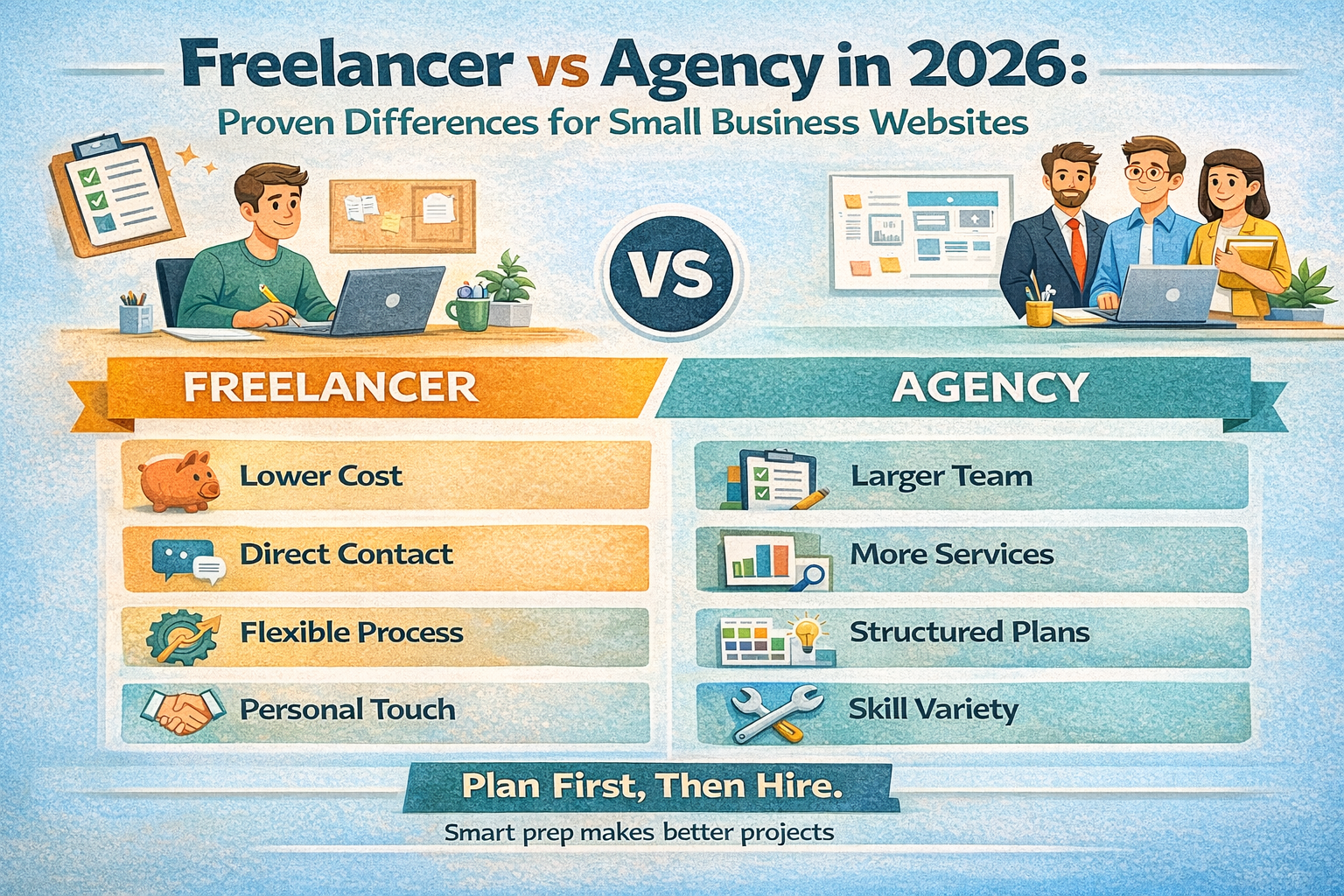
Freelancer vs Agency in 2026: Proven Differences for Small Business Websites
Freelancer vs Agency in 2026: Proven Differences for Small Business Websites At some point, most business owners who plan a
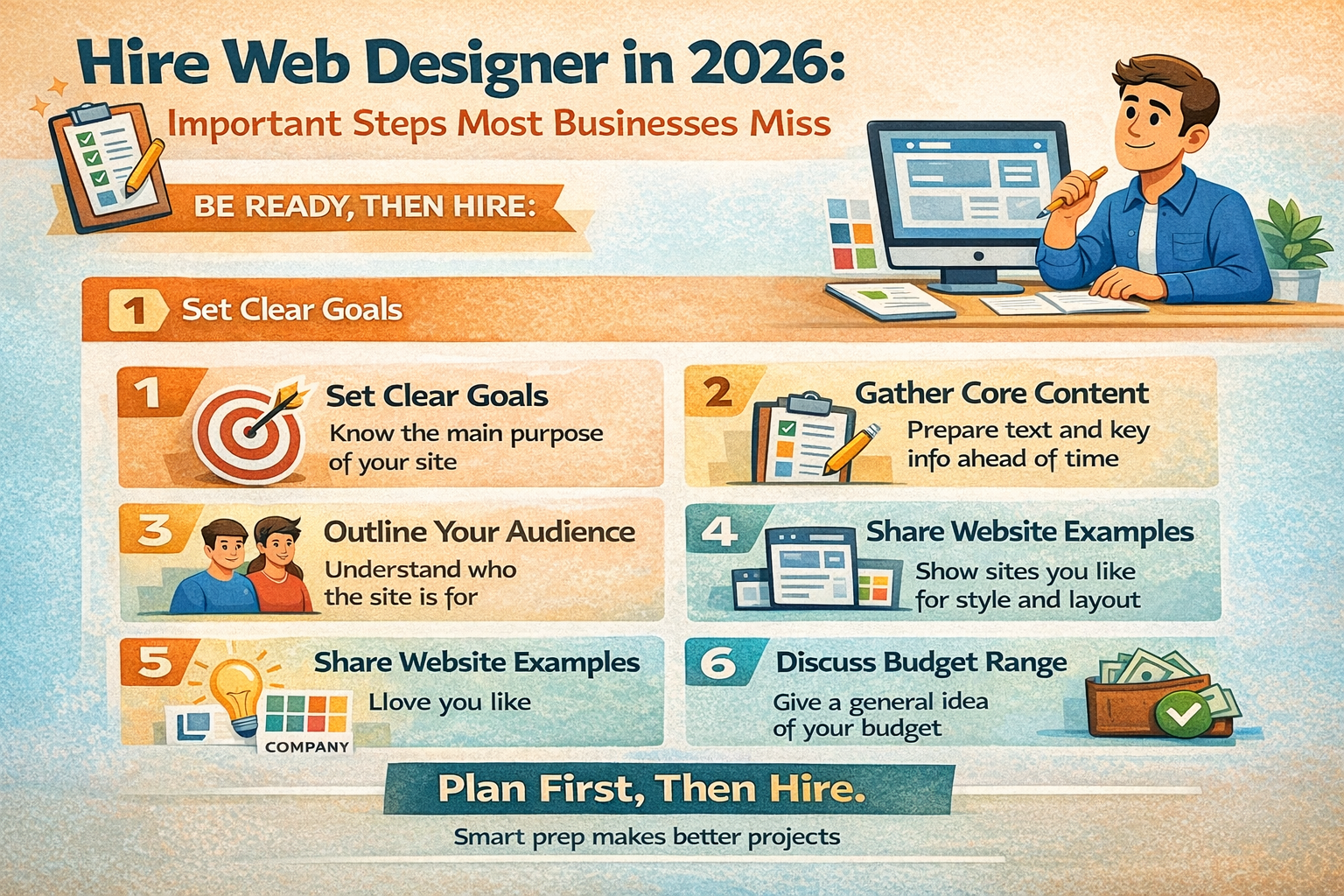
Hire Web Designer in 2026: Important Steps Most Businesses Miss
Hire Web Designer in 2026: Important Steps Most Businesses Miss I’ve noticed something over the years when talking with business