How Often Should You Redesign Your Business Website?
I get asked this question more often than people might expect. Sometimes directly, sometimes indirectly when someone says, “My website feels outdated, should I rebuild it?”
It’s a reasonable concern. Technology changes. Design trends shift. User expectations evolve. So it’s easy to assume a website redesign should happen regularly, almost like replacing a phone every couple of years.
But from what I’ve seen working with business websites, redesigning too often can actually be just as problematic as never redesigning at all.
There isn’t a fixed timeline that works for everyone. The right answer depends less on time and more on performance, clarity, and usefulness. Still, there are patterns that tend to hold true across most sites.
A Website Should Be Updated More Often Than It’s Redesigned
One important distinction I usually explain is this:
Updating and redesigning are not the same thing.
Many people think their site needs a full website redesign when what it really needs is refinement. Updating content, improving speed, clarifying structure, or fixing usability issues can often solve performance problems without rebuilding everything.
In fact, most high-performing websites evolve gradually. They’re adjusted, tested, improved — not replaced all at once.
A redesign should be considered when the foundation itself no longer supports what the business needs.
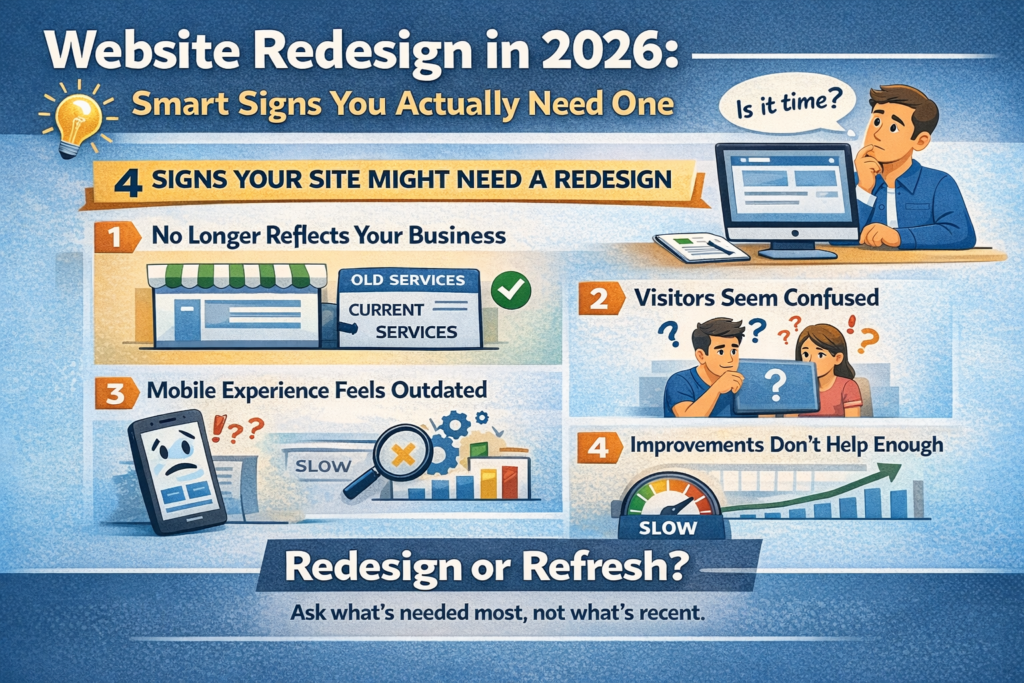
Signs It Might Be Time for a Website Redesign
Instead of focusing on years, it’s more useful to look for signals. Certain patterns usually indicate when a website redesign is genuinely necessary.
- The Site No Longer Reflects Your Business
Businesses grow, services change, positioning evolves. If your site still describes what you did years ago rather than what you do now, that’s a strong indicator.
A website should represent your current business, not your past version.
- Visitors Seem Confused
If people frequently ask questions that your site should already answer, that often means the structure or messaging isn’t working.
This isn’t always obvious from the inside. But when multiple visitors misunderstand what you offer, it’s often a sign the layout or content flow needs more than minor edits — possibly a full website redesign.
- Mobile Experience Feels Outdated
Mobile expectations have changed quickly. A site that felt fine a few years ago might now feel cramped or awkward on phones.
If navigation is difficult, buttons are hard to tap, or layouts break on smaller screens, a redesign might be more practical than patching individual problems.
- Performance Improvements Don’t Help Enough
Sometimes businesses try to fix speed, SEO, or usability issues but don’t see much improvement. That can happen when the underlying structure is limiting what’s possible.
At that point, continuing to patch things can take more effort than doing a proper website redesign with a stronger foundation.
Typical Timeframes (Realistically Speaking)
There’s no universal rule, but from what I’ve observed, many businesses end up considering a website redesign somewhere between:
3 to 5 years
Not because the design suddenly expires — design doesn’t really work like that — but because:
- business goals evolve
- user expectations shift
- technology standards improve
- competitors upgrade
Some sites last much longer without needing a full rebuild. Others need changes sooner. The timeline mostly depends on how well the site was built in the first place and how actively it’s maintained.
Redesign vs Refresh — A Practical Comparison
Situation | Refresh Needed | Full Redesign Needed |
Content outdated | ✔ | |
Minor UX issues | ✔ | |
Slow speed | ✔ | |
Rebranding | ✔ | |
Outdated structure | ✔ | |
Hard to navigate | ✔ | |
Platform limitations | ✔ |
Many businesses assume they need a full website redesign when a structured refresh would be enough. Knowing the difference saves time, cost, and unnecessary disruption.
Why Redesigning Too Often Can Hurt
This part surprises people sometimes.
Frequent redesigns can actually create problems:
- search rankings reset or fluctuate
- users must relearn navigation
- brand consistency weakens
- resources get wasted
A website works best when it evolves steadily rather than restarting repeatedly. Stability builds familiarity. Familiarity builds trust.
That’s why I usually suggest evaluating performance first before deciding on a website redesign. If the site is still doing its job, rebuilding it just because it “feels old” might not be the right move.
What Actually Matters More Than Design Age
Visitors don’t judge a site by its launch date. They judge it by how it feels to use.
A five-year-old site can still perform well if it’s:
- fast
- clear
- easy to navigate
- mobile friendly
- trustworthy
On the other hand, even a brand new site can struggle if it lacks clarity or structure. I’ve seen both situations, honestly.
This is why deciding on a website redesign should always be based on performance signals, not just aesthetics.
Questions Worth Asking Before Redesigning
Before committing to a full rebuild, it helps to ask:
- Is the site actually underperforming?
- Are visitors struggling to understand our offer?
- Are conversions lower than expected?
- Is the structure limiting improvements?
- Would targeted fixes solve the problem instead?
If the answer to most of these is yes, then a website redesign might be justified. If not, refinement is often the smarter step.
Final Thoughts
There isn’t a universal schedule for redesigning a business website. Time alone isn’t the best indicator.
From what I’ve seen, the right moment for a website redesign is when your site can no longer support your goals, communicate clearly, or meet user expectations. Until then, improving and refining what you already have is usually more effective than starting over.
A strong website isn’t defined by how recently it was redesigned. It’s defined by how well it works.
Signal to Watch Going Forward
If you’re unsure whether your site needs a redesign or just improvements, pay attention to how visitors behave — hesitation usually reveals more than analytics alone.
- Follow Arsh_Webs on Instagram for practical insights on website performance, usability, and real improvement patterns.
- Bookmark Arshwebs.com if you prefer experience-based guidance instead of trend-driven advice.
- Check back occasionally as expectations around usability, structure, and trust continue evolving through 2026.
Most successful websites aren’t rebuilt often. They’re improved thoughtfully.
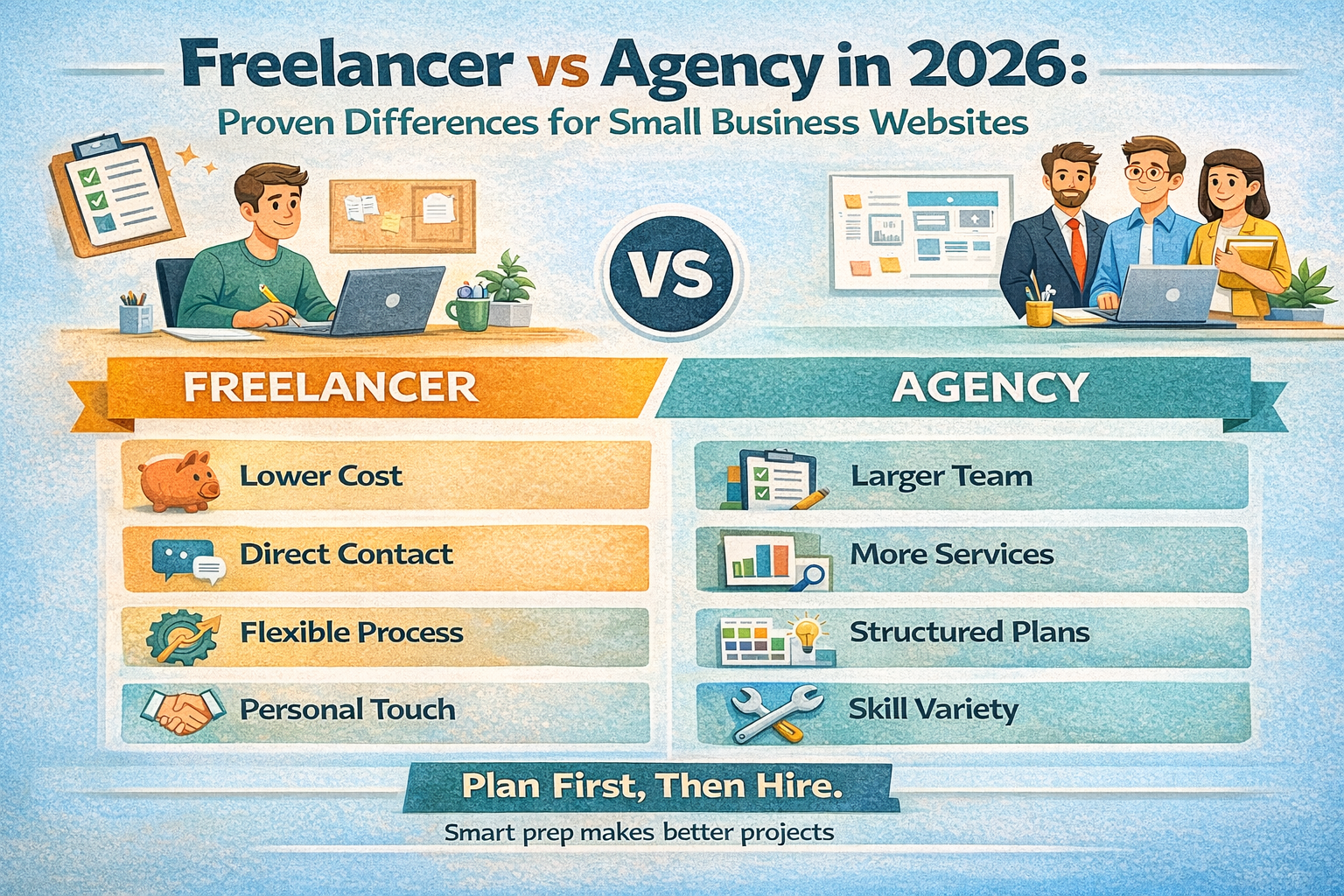
Freelancer vs Agency in 2026: Proven Differences for Small Business Websites
Freelancer vs Agency in 2026: Proven Differences for Small Business Websites At some point, most business owners who plan a
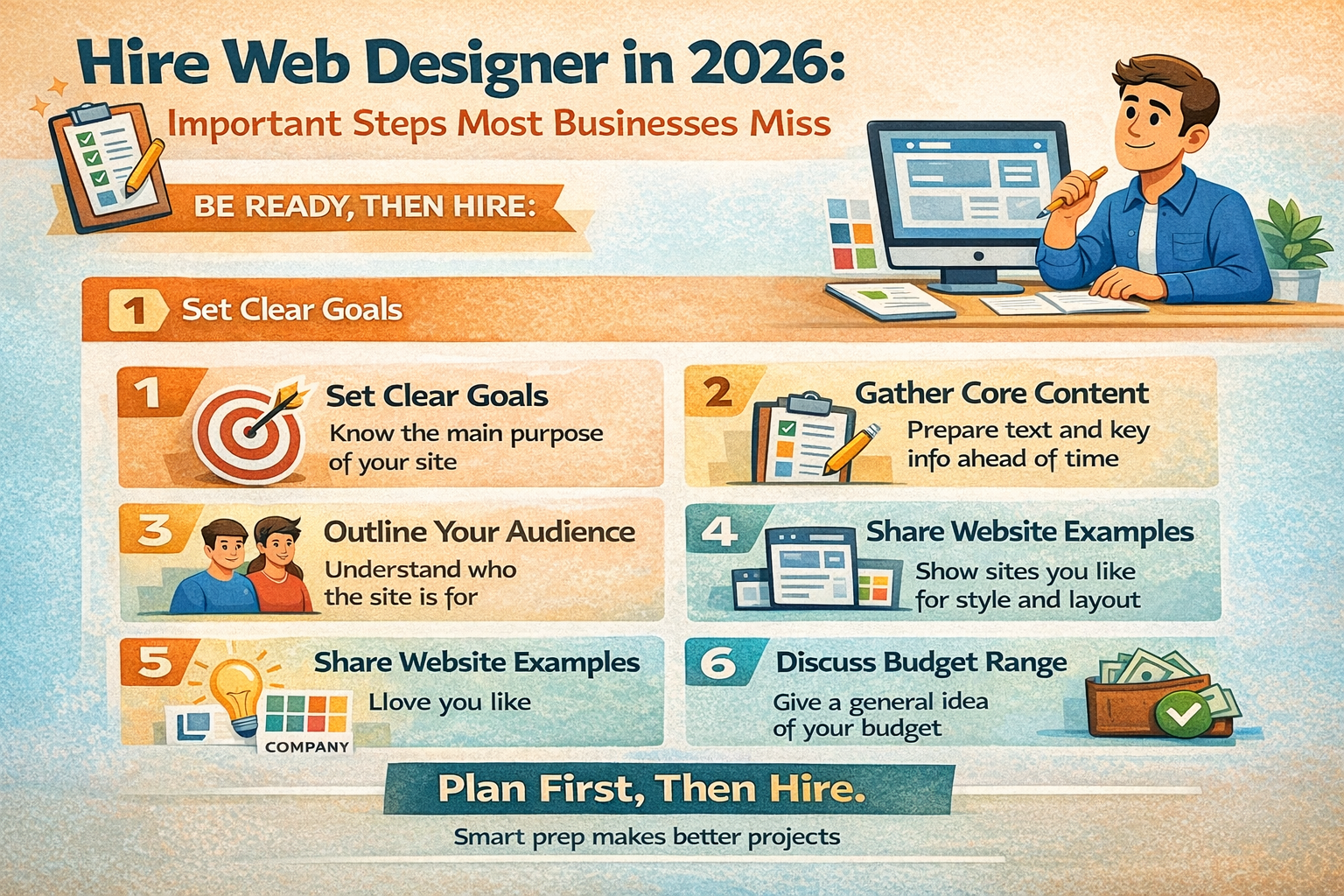
Hire Web Designer in 2026: Important Steps Most Businesses Miss
Hire Web Designer in 2026: Important Steps Most Businesses Miss I’ve noticed something over the years when talking with business