Website Speed in 2026: Why Slow Sites Lose Customers
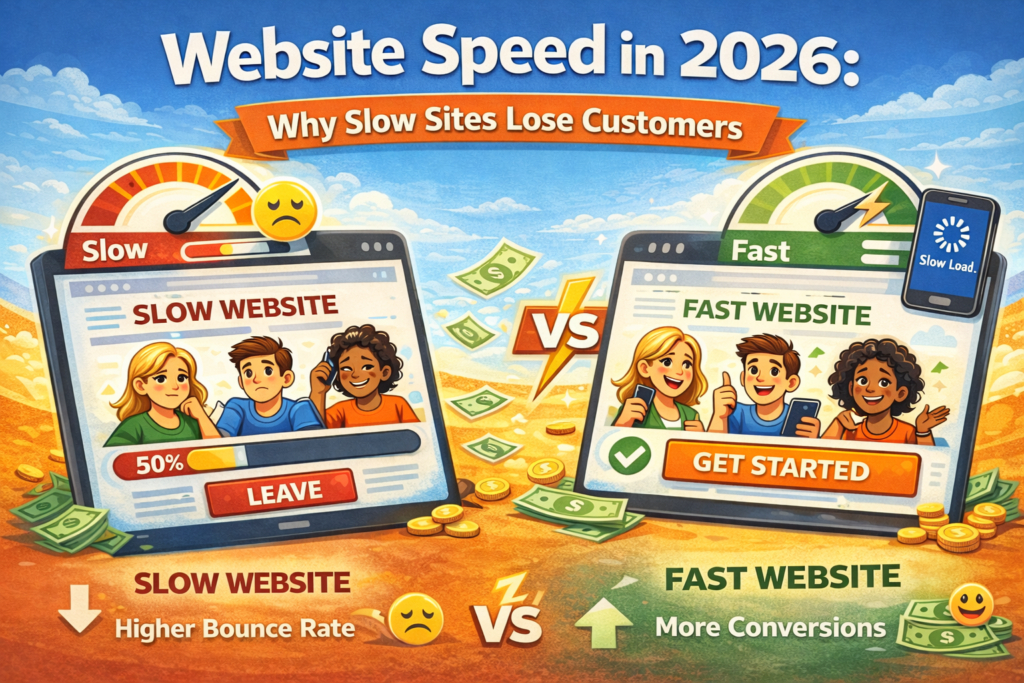
I’ve reviewed a lot of business websites over time, and one pattern shows up again and again. When a site isn’t converting well, owners often assume the problem is pricing, competition, or traffic quality.
Sometimes it is. But more often than people expect, the real issue is something quieter — website speed and mobile usability.
These two factors don’t usually look dramatic from the outside. Nothing appears “broken.” Yet they strongly influence whether visitors stay, trust you, and take action. In 2026, that influence is stronger than it used to be, partly because user expectations have changed faster than many websites have.
This isn’t theory. It’s based on patterns I keep noticing when analyzing sites that should be performing better than they are.
Speed Is the First Impression Most People Don’t Notice
Visitors rarely say, “This site is slow.” They just leave.
That’s why website speed matters so much. It shapes perception before someone even reads a headline or sees your offer. A delay of even a couple seconds can create subtle friction. The page feels heavier, less responsive, less reliable.
Fast sites feel easier to trust. Slow ones feel outdated — even if the design looks modern.
In many cases, when speed improves, engagement improves too. Not always instantly, but noticeably.
Mobile Experience Is Now the Default Experience
Years ago, mobile optimization was optional. That’s not true anymore.
For most businesses today, the majority of visitors arrive from phones. Which means your mobile layout isn’t a secondary version of your site — it’s the main version people experience.
When mobile design is weak, visitors run into problems like:
- text that’s hard to read
- buttons too small to tap
- layouts that require zooming
- sections that feel cramped
These might seem like minor inconveniences, but they add friction. And friction reduces conversions.
A well-optimized mobile layout combined with strong website speed removes that friction almost entirely. Users don’t have to think about how to use the site. They just use it.
Why Speed Directly Affects Conversions
Speed isn’t just technical performance. It’s psychological.
When a page loads quickly, it signals:
- professionalism
- reliability
- competence
When it loads slowly, the opposite impression can form — even if visitors don’t consciously notice it.
This is why website speed influences conversion rates so strongly. People are more willing to contact, purchase, or inquire when the experience feels smooth. A fast site suggests the business behind it is organized and capable.
It sounds simple, maybe even obvious, but I’ve seen businesses improve results just by fixing performance issues without changing anything else.
The Connection Between Speed, Mobile, and Trust
Trust online is fragile. Visitors make decisions quickly, often based on subtle cues rather than detailed analysis.
Slow loading, awkward layouts, or clunky scrolling create small moments of hesitation. One hesitation isn’t a problem. Several in a row usually are.
That’s why website speed and mobile design work together. Speed keeps attention. Mobile usability keeps momentum. When both are strong, visitors move through the site without resistance.
And when resistance disappears, conversions tend to rise.
Website Speed vs Visual Complexity
One thing I’ve noticed is that performance issues often come from good intentions.
Businesses want:
- high-quality images
- animations
- interactive elements
- visual effects
None of these are bad on their own. But when they aren’t optimized properly, they slow everything down.
In the balance between visuals and performance, website speed usually has the bigger impact on results. Visitors appreciate design, but they value responsiveness more.
A simpler fast site often converts better than a visually impressive slow one. I’ve tested this more than once, and the outcome is surprisingly consistent.
Comparison: Fast vs Slow Website Experience
Factor | Fast Website | Slow Website |
First impression | Smooth and professional | Slightly frustrating |
Engagement | Higher | Lower |
Trust perception | Stronger | Weaker |
Mobile usability | Easy to navigate | Feels clunky |
Conversion likelihood | Higher | Lower |
Improving even one of these areas can noticeably affect performance. Improving several at once can change how the entire site feels.
Why Many Businesses Overlook This
Most owners don’t intentionally ignore performance. Usually, speed problems happen because:
- the site wasn’t tested on real devices
- images weren’t optimized
- too many plugins or scripts were added
- no one reviewed loading time after launch
In other words, it’s rarely neglect. It’s usually just lack of awareness. Website speed issues often stay hidden until someone checks them deliberately.
Small Fixes That Often Make a Big Difference
The good news is that performance improvements don’t always require rebuilding your site.
Some of the most effective adjustments are fairly straightforward:
- compressing large images
- removing unnecessary scripts
- simplifying layouts
- improving hosting quality
Individually, these changes might seem small. Together, they can noticeably improve website speed and user experience.
And when experience improves, conversions tend to follow.
Why This Matters More in 2026 Than Before
User expectations have shifted. People are used to fast apps, fast platforms, and instant responses. That standard now carries over to websites.
In 2026, visitors don’t compare your site to your competitors’ sites. They compare it to the fastest digital experiences they use daily.
That’s why website speed has become less of a technical metric and more of a business factor. It directly affects whether people stay long enough to trust you.
Final Thoughts
Speed and mobile usability don’t always get the attention they deserve because they operate quietly in the background. But they shape nearly every interaction a visitor has with your site.
From what I’ve seen, improving website speed and mobile design often produces stronger results than redesigning the entire site. Not because design doesn’t matter — it does — but because usability and performance influence decisions more than most people realize.
If your website gets traffic but fewer inquiries than expected, performance might be worth examining before changing anything else.
Signal to Watch Going Forward
If you’re evaluating your website’s performance, watch how quickly visitors engage — hesitation often signals friction more than disinterest.
- Follow Arsh_Webs on Instagram for practical insights on performance, usability, and real website behavior patterns.
- Bookmark Arshwebs.com if you prefer grounded, experience-based guidance instead of surface-level tips.
- Check back occasionally as expectations around speed, mobile design, and user behavior continue evolving through 2026.
Strong websites rarely improve through big changes alone. Usually it’s small, technical refinements that make the biggest difference.
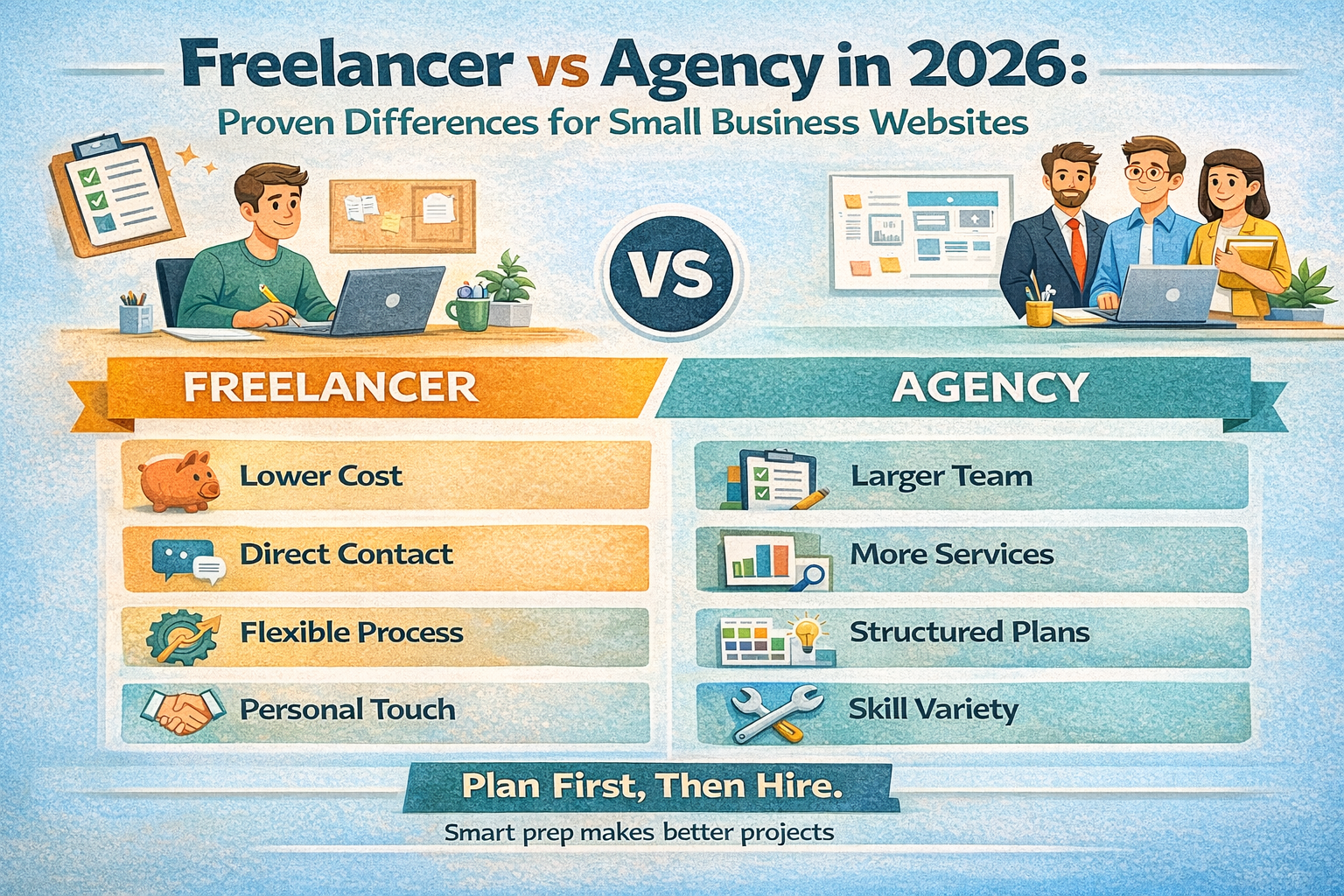
Freelancer vs Agency in 2026: Proven Differences for Small Business Websites
Freelancer vs Agency in 2026: Proven Differences for Small Business Websites At some point, most business owners who plan a

Hire Web Designer in 2026: Important Steps Most Businesses Miss
Hire Web Designer in 2026: Important Steps Most Businesses Miss I’ve noticed something over the years when talking with business