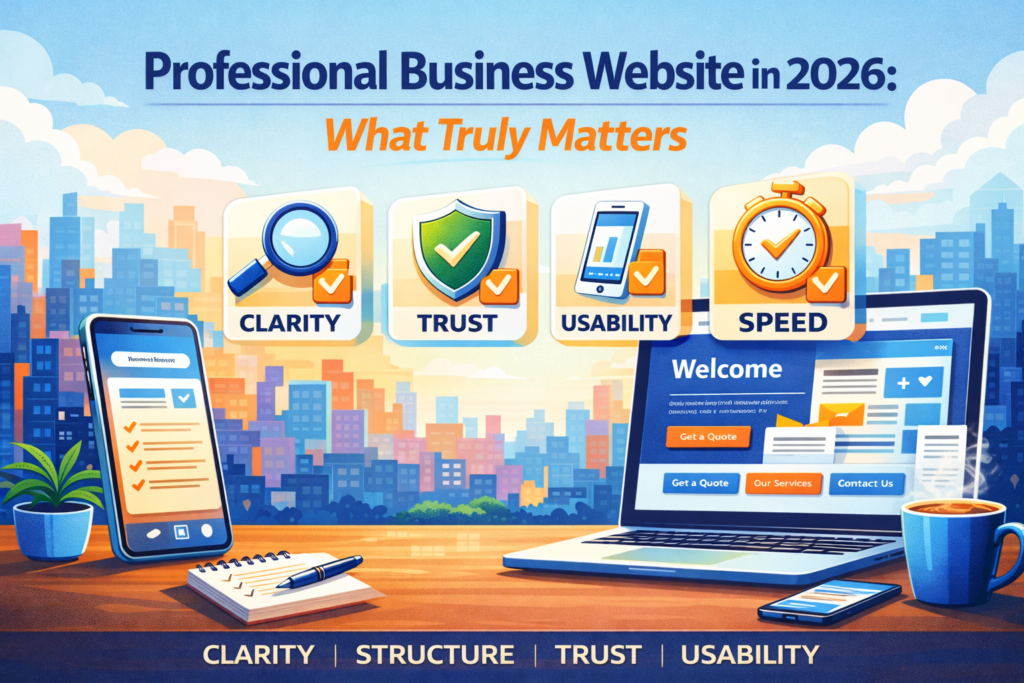
Professional Business Website in 2026: What Truly Matters
Over the last few years, I’ve reviewed and worked on many business websites that look modern but don’t actually feel professional once you spend a few minutes on them.
That difference matters more in 2026 than it did before.
A professional business website today isn’t defined by animations, bold fonts, or trendy layouts. It’s defined by how clearly it answers questions, how calmly it builds trust, and how little effort it demands from the visitor.
I’m writing this from experience, not theory. I’ve seen simple websites outperform expensive ones, and polished designs fail because the basics were ignored. What follows isn’t a checklist pulled from trends — it’s what consistently works.
Professional No Longer Means “Fancy”
One mistake I still see is equating professional with complex.
In 2026, a professional business website feels intentional, not overloaded. It respects the visitor’s time. It doesn’t force them to figure things out.
Professional now looks like:
- clear navigation
- readable content
- fast loading
- honest messaging
If someone lands on your site and immediately understands what you do, who it’s for, and what to do next, you’re already ahead of most businesses.
Clarity Is the First Signal of Professionalism
When people visit a business website, they’re usually asking one silent question: “Am I in the right place?”
A professional site answers that within seconds.
This means:
- a clear headline that explains the service
- supporting text that removes ambiguity
- no vague slogans doing the heavy lifting
A professional business website doesn’t try to sound clever. It tries to be understood. That difference alone changes how trustworthy the site feels.
Structure Matters More Than Visual Style
Design still matters, but structure matters more.
I’ve noticed that many sites fail not because of poor design, but because information is scattered. Important details are buried. Pages don’t flow logically.
A professional website usually has:
- a clear homepage purpose
- dedicated service pages
- an obvious contact path
- consistent layout across pages
When structure is strong, even a modest design feels reliable. When structure is weak, no amount of polish saves it.
Trust Is Built Through Small Signals
Trust doesn’t come from a single element. It’s cumulative.
On a professional business website, trust is built through:
- real language, not exaggerated claims
- clear contact information
- consistent branding and tone
- up-to-date content
Even small things matter. Broken links, outdated copy, or missing details quietly erode confidence. Most visitors won’t tell you — they’ll just leave.
Content Should Sound Human, Not Perfect
One thing that stands out on professional sites is how the content reads.
It doesn’t sound robotic. It doesn’t sound over-polished either. It feels like it was written by someone who understands the work.
In 2026, a professional business website avoids:
- generic marketing phrases
- inflated promises
- unnecessary jargon
Instead, it explains things the way you would explain them to a real client. Occasionally imperfect, but honest. That tone builds credibility far faster than “perfect” copy.
Speed and Usability Are Non-Negotiable
This isn’t exciting, but it’s critical.
A professional website must:
- load quickly
- work smoothly on mobile
- avoid clutter and popups
Users are less forgiving now. Slow or awkward sites don’t feel professional — they feel outdated.
Speed isn’t just technical performance. It’s cognitive speed too. How fast someone understands what to do on the site matters just as much.
Professional Business Website vs “Just an Online Presence”
Here’s a simple way to see the difference in practice:
Aspect | Professional Business Website | Basic Online Presence |
Messaging | Clear and intentional | Vague or inconsistent |
Structure | Planned, logical flow | Disconnected pages |
Trust signals | Strong and visible | Minimal or missing |
Mobile experience | Optimized | Often compromised |
Search visibility | Built for long-term | Limited |
Conversion path | Clear next steps | Unclear or absent |
A professional business website is built to guide decisions, not just exist online.
Search Engines Still Favour Professional Signals
Despite changes in search algorithms, one thing hasn’t changed much: Google still looks for clarity, relevance, and consistency.
A professional site helps search engines understand:
- what services you offer
- who those services are for
- how authoritative and reliable the site is
That’s difficult to achieve without structured pages, clear content, and a stable website foundation. Social profiles alone rarely provide that depth.
Professionalism Is About Reducing Friction
The best way I can describe a professional website in 2026 is this:
It removes friction.
It doesn’t make visitors guess.
It doesn’t overwhelm them.
It doesn’t try too hard to impress.
A professional business website quietly supports the decision-making process. That’s why it works — even when it looks simple.
Final Thoughts
Professionalism online has matured.
In 2026, a professional business website isn’t defined by trends or tools. It’s defined by clarity, structure, trust, and usability. The businesses that understand this tend to grow more steadily, even if they’re small.
If your website helps people understand you, trust you, and contact you without effort, it’s already doing its job.
Everything else is optional.
Signal to Watch Going Forward
If you’re evaluating or improving your professional business website, pay attention to how visitors behave — where they hesitate, what they look for, and what questions keep coming up.
- Follow Arsh_Webs on Instagram for practical insights on websites, structure, and real digital decisions businesses face.
- Bookmark Arshwebs.com if you value experience-based writing over surface-level advice.
- Check back as expectations around clarity, speed, and trust continue to evolve through 2026.
Professional websites aren’t built all at once. They’re refined through attention and small, consistent improvements.
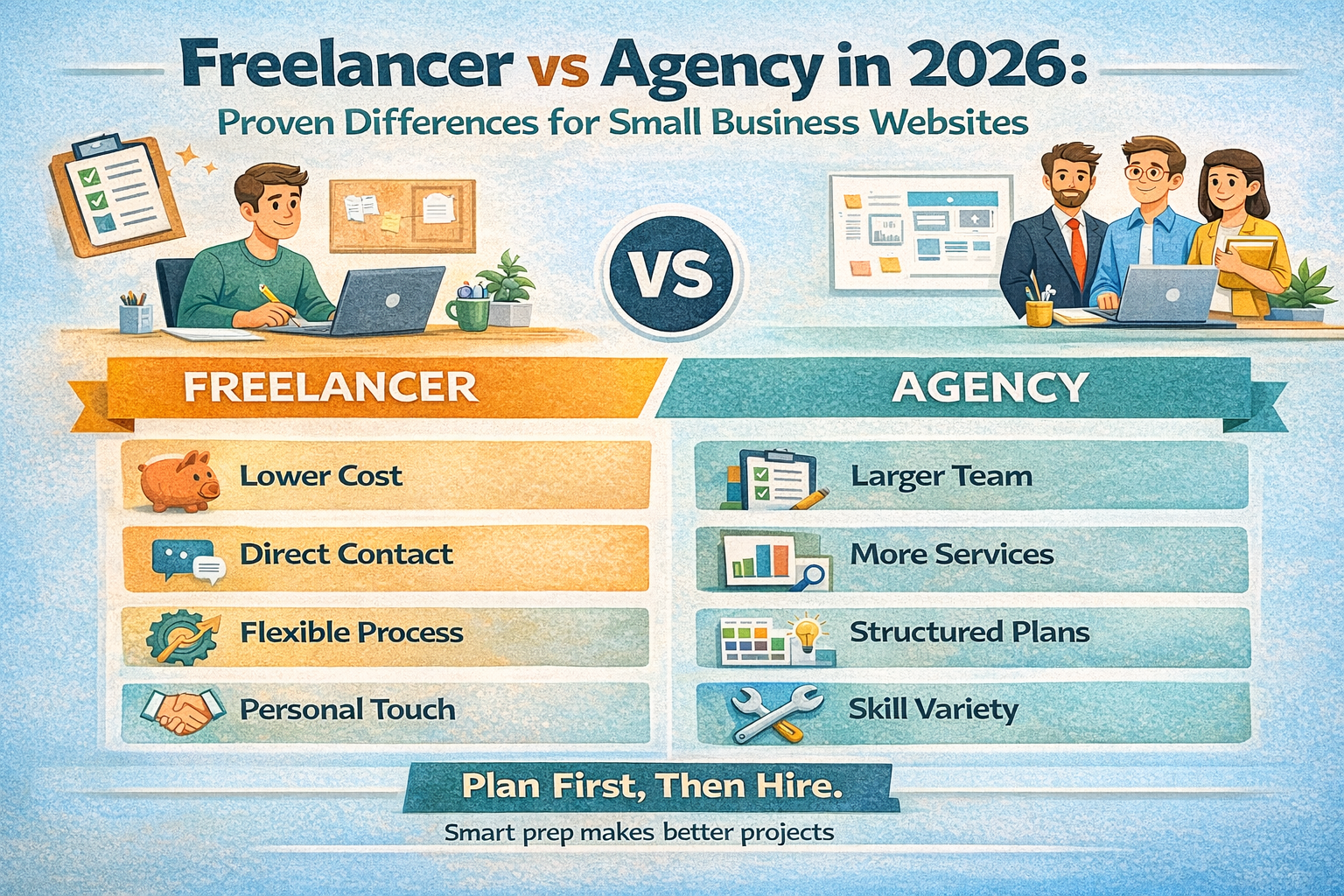
Freelancer vs Agency in 2026: Proven Differences for Small Business Websites
Freelancer vs Agency in 2026: Proven Differences for Small Business Websites At some point, most business owners who plan a
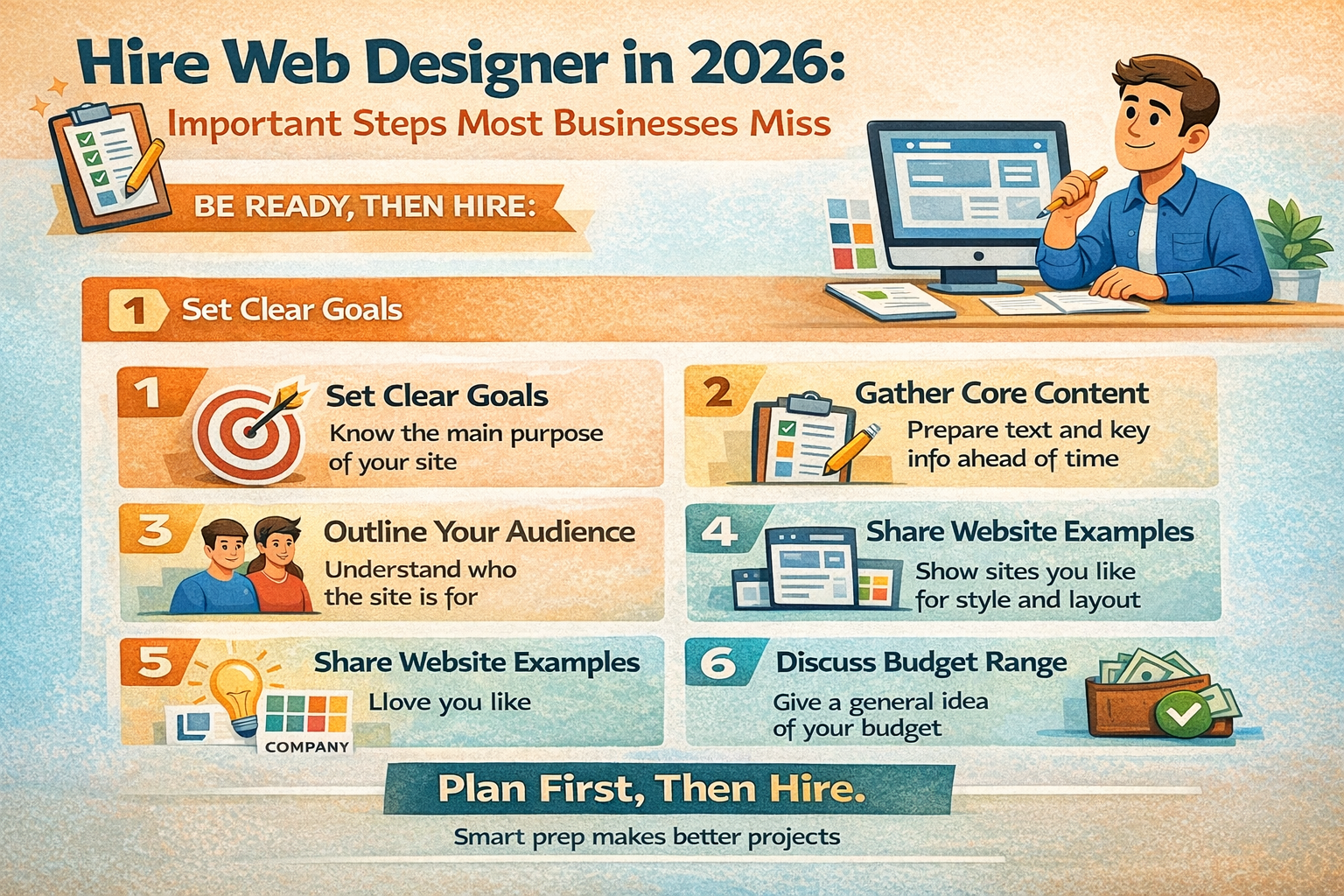
Hire Web Designer in 2026: Important Steps Most Businesses Miss
Hire Web Designer in 2026: Important Steps Most Businesses Miss I’ve noticed something over the years when talking with business