Small Business Website in 2026: Why It Still Matters
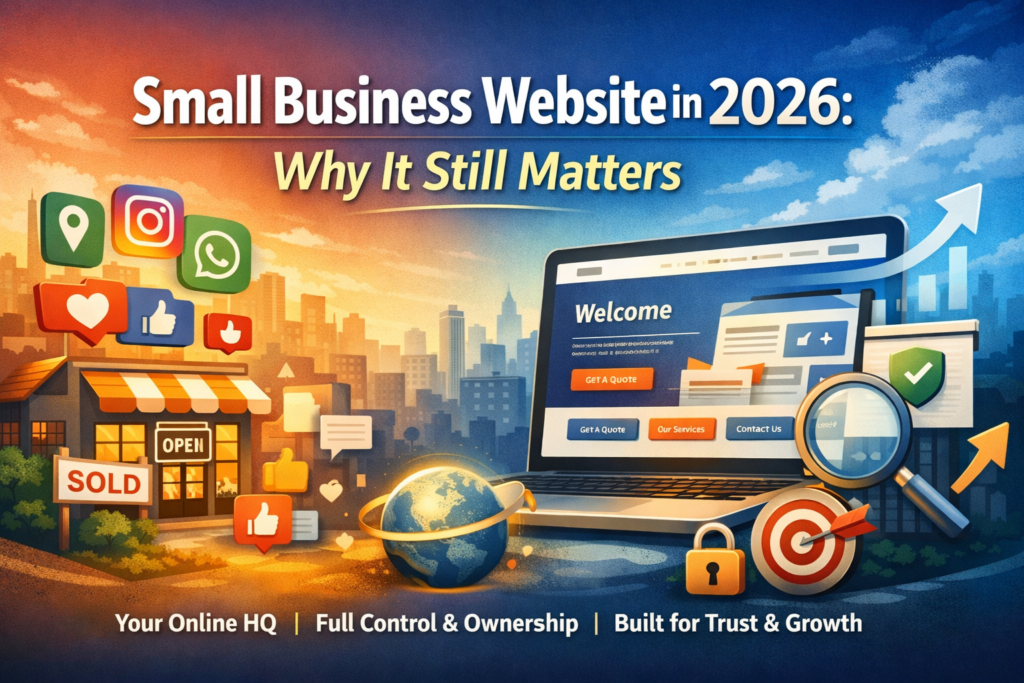
I hear this question more often than people admit, sometimes said openly and sometimes hinted at:
“Do I really need a website anymore? I already have Instagram, WhatsApp, and Google Maps.”
It’s a reasonable doubt. The internet doesn’t work the way it did even five years ago. Social platforms make visibility easy, sometimes surprisingly easy. But after working with and reviewing many small business websites over time, I’ve noticed a pattern that keeps repeating. Businesses that depend only on social platforms usually grow fast at first, then slow down. Trust becomes harder to earn, reach becomes unpredictable, and control slowly slips away.
This is where a small business website still matters in 2026. Not as a fancy upgrade. More as a base layer that everything else depends on.
I’m not writing this to convince anyone aggressively. I’m writing it because I’ve seen where things quietly go wrong, often without the business owner realizing it until much later.
A Website Is the Only Online Asset You Truly Own
Social media feels powerful, and in many ways it is. But it always comes with conditions. Algorithms change without warning. Reach drops for no clear reason. Accounts get limited, flagged, or sometimes disappear completely. None of that is really in your hands.
Your website works differently.
A small business website is one of the few digital assets you fully control. You decide how it looks, what it says, and how people move through it. No platform decides who sees your content or how often. If you want to change your services, explain pricing more clearly, or highlight recent work, you can do it instantly.
Ownership sounds abstract until you lose it. Then it becomes very real.
Website vs Social Media for Small Businesses
Aspect | Small Business Website | Social Media Platforms |
Ownership | You fully own the site and its content | Platform-owned, rules change often |
Control | Full control over layout, content, and flow | Limited design and structure |
Trust & Credibility | Feels stable and professional | Often feels informal or temporary |
Search Visibility | Can rank on Google long term | Posts fade quickly |
Lead Conversion | Built to guide users to act | Harder to convert serious leads |
Long-Term Value | Grows stronger over time | Depends heavily on algorithms |
I’ve seen businesses grow quickly on social media alone and do fine for a while. But sooner or later, the lack of control almost always becomes an issue.
Trust Is Built Faster on a Website Than on Social Media
When someone hears about your business for the first time, their instinct is simple. They search your name.
If they land on a clean, professional website that clearly explains:
- what you do
- who you work with
- how to contact you
trust forms almost immediately, often without them realizing it.
If instead they find only a social profile with scattered posts, missing details, or outdated information, doubt creeps in. Even if your service is solid.
A website doesn’t need to impress anyone visually. It just needs to feel deliberate. In my experience, people subconsciously associate a proper website with seriousness and stability. It signals that the business is invested and likely to stick around.
A Small Business Website Explains Things You’re Tired of Repeating
This is something many business owners don’t notice until they feel exhausted.
How often do you answer the same questions?
- “What exactly do you offer?”
- “How much does it usually cost?”
- “Are you currently available?”
- “How does your process work?”
A well-structured website handles these questions quietly in the background.
Instead of explaining the basics again and again, you can simply point people to your site. Over time, this filters out casual inquiries and brings in people who already understand what you do. Conversations become shorter, clearer, and more productive.
It saves more time than most people expect.
Google Still Depends on Websites, Not Just Profiles
Search has changed, but one thing hasn’t: Google still relies heavily on websites to understand a business properly.
A Google Business profile helps, but it’s limited. A website gives context:
- what your business actually focuses on
- which services matter most
- where you operate
- how consistent and trustworthy your information is
This is especially important for local and service-based businesses. Without a website, you often miss out on searches where people are actively looking for solutions, not just browsing.
Put simply, if you want to be found intentionally, a website still does a lot of the heavy lifting.
Websites Convert Interest Into Action
Social media is good at catching attention. Websites are better at guiding decisions.
When someone lands on your website, you can lead them:
- from problem to solution
- from curiosity to contact
- from interest to a clear next step
You can structure pages to answer doubts naturally and make it easy to act. This is difficult to do on platforms where layout, links, and flow are restricted.
I’ve seen businesses with decent engagement on social media but very few serious inquiries. Once their website was improved or rebuilt with intent, that slowly changed. Not instantly, but consistently.
A Website Makes Your Business Look Bigger Than It Is (In a Good Way)
This might sound strange at first, but it’s true.
A small business website can make even a one-person operation feel organized and reliable. Clear pages, simple navigation, and consistent messaging reduce uncertainty. People don’t mind working with small businesses. They do hesitate when things feel unclear.
This isn’t about pretending to be something you’re not. It’s about removing friction before the first conversation even happens.
Social Media Should Support Your Website, Not Replace It
I’m not against social media. It plays an important role. But it works best when it points somewhere stable.
Think of social platforms as entry points. Your website is the destination.
Posts attract attention. Stories build familiarity. But when someone wants to understand things properly or take the next step, they usually look for a website. Without one, momentum often fades.
The businesses that grow steadily tend to connect these pieces instead of choosing one over the other.
Cost Is No Longer the Real Barrier
Cost used to be a valid reason to avoid building a website. That’s less true now.
Tools are better. Hosting is cheaper. Workflows are simpler. What matters more today is clarity and intent, not budget alone.
A simple, fast, clearly written website often performs better than a complex one. I’ve seen expensive sites fail and modest ones work well. The difference usually comes down to purpose, not price.
Final Thoughts
A small business website in 2026 isn’t about trends or appearances. It’s about control, clarity, and credibility.
If your business depends on trust, understanding, and long-term visibility, a website supports all of that quietly in the background. It doesn’t replace personal connection, but it prepares people for it.
That’s why I still recommend having one. Not because it’s fashionable, but because it solves problems most businesses only notice when growth starts slowing.
If you treat your website as a working tool instead of a formality, it tends to return value in ways that aren’t always immediate—but are usually worth it.
Signal to Watch Going Forward
If you’re thinking about improving your small business website, keep an eye on how user expectations are changing — not just design trends, but how people decide who to trust online.
- Follow Arsh_Webs on Instagram for practical insights on websites, SEO, and real-world digital decisions small businesses face.
- Bookmark Arshwebs.com if you want clear, experience-based reads on building websites that actually work, not just look good.
- Check back occasionally as ideas around speed, trust, and visibility continue to shift through 2026.
This isn’t about chasing trends. It’s about making steady, informed improvements that compound over time.
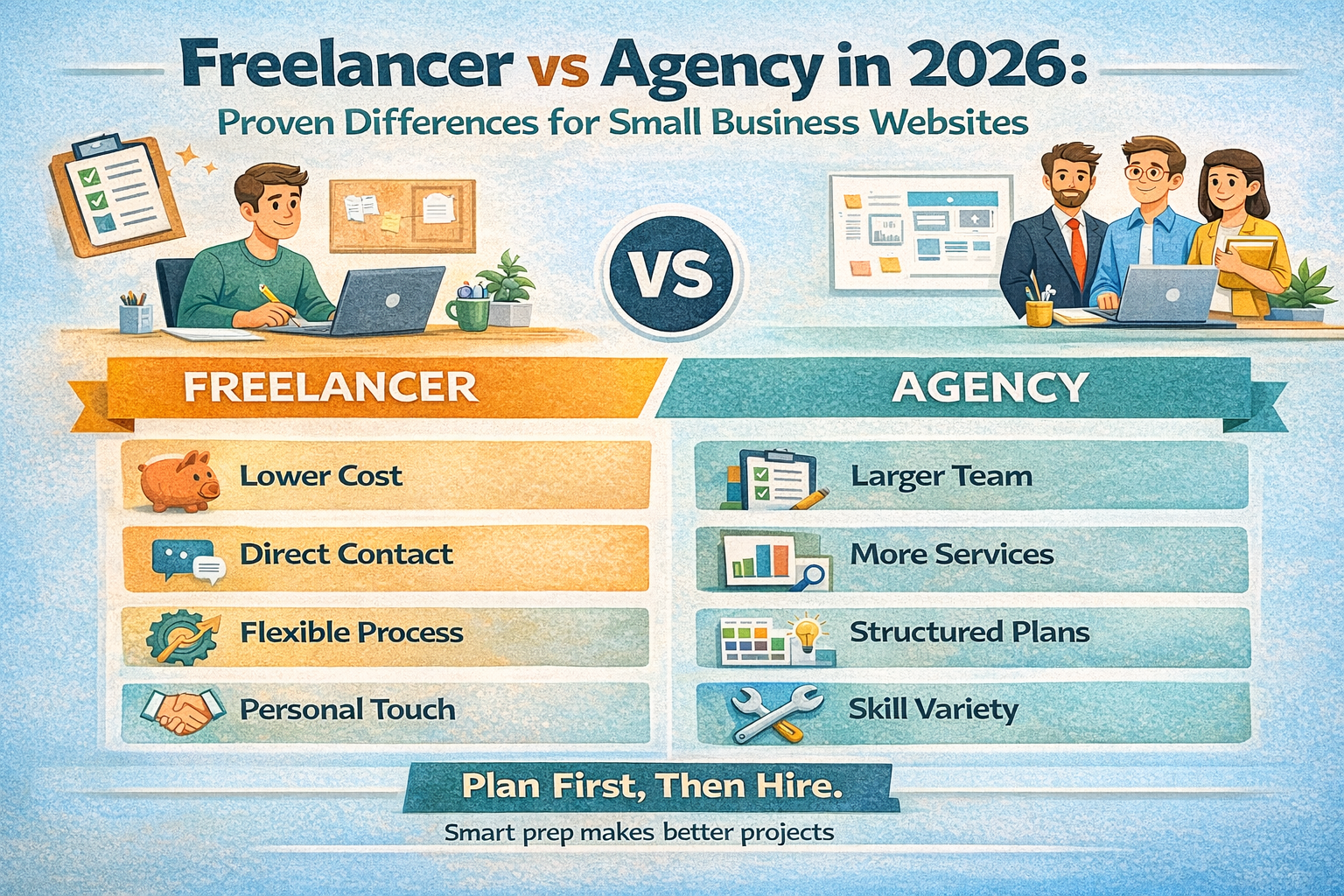
Freelancer vs Agency in 2026: Proven Differences for Small Business Websites
Freelancer vs Agency in 2026: Proven Differences for Small Business Websites At some point, most business owners who plan a
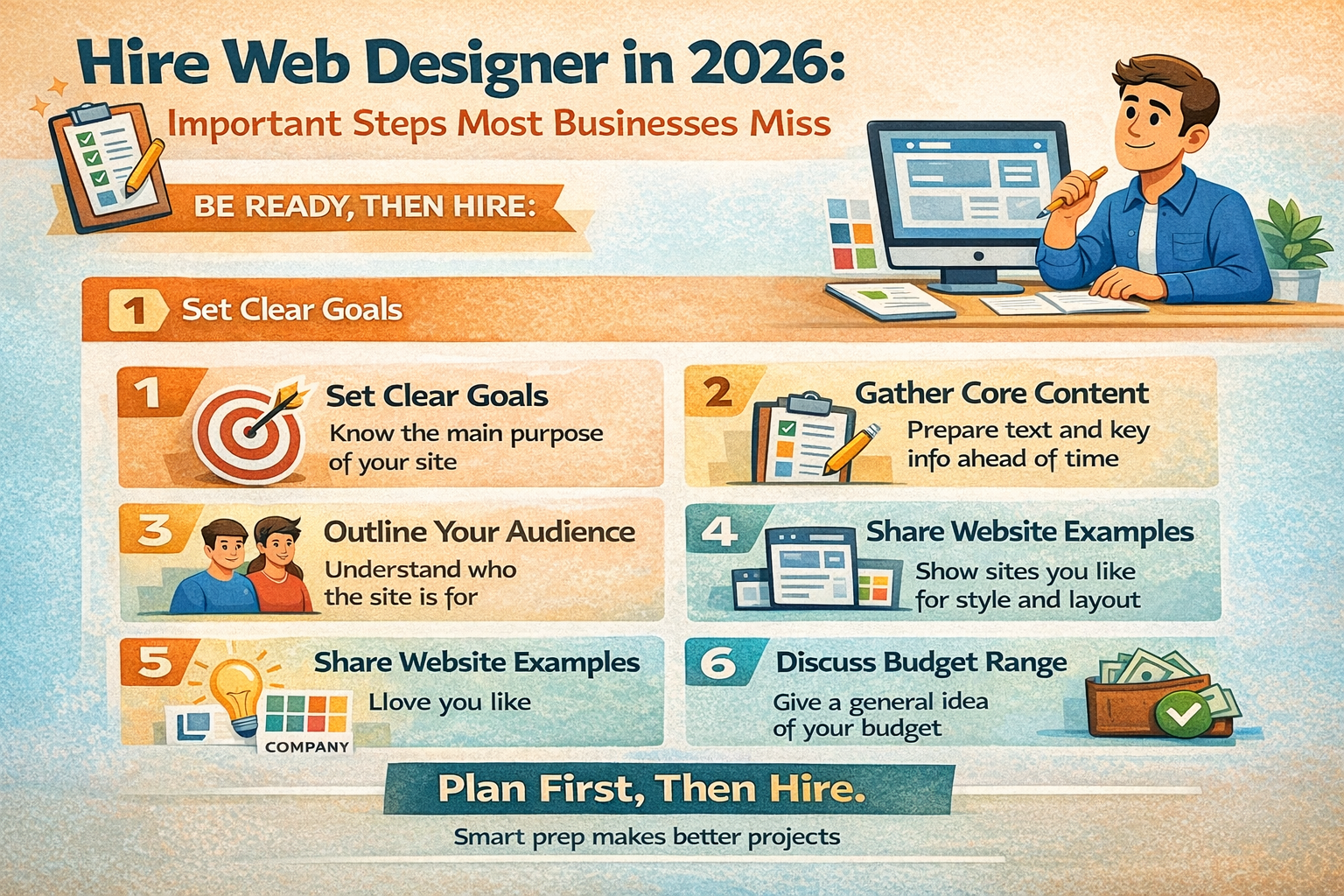
Hire Web Designer in 2026: Important Steps Most Businesses Miss
Hire Web Designer in 2026: Important Steps Most Businesses Miss I’ve noticed something over the years when talking with business